The first time you try making coffee in a French press, you realize how different—how much richer—your cup can taste. But the process itself can feel like a puzzle the first few mornings. Ever ended up with gritty, bitter sludge instead of that silky, full-bodied goodness people rave about? If you’ve been there, you’re definitely not alone; it happens more than you think.
Here’s the thing: when you don’t have the basics down, all the variables—coffee grind, water temp, brewing time—turn into a frustrating guessing game. You waste precious beans, mornings are less satisfying, and you start doubting if home-brewed French press is even worth the mess. It’s enough to make you want to give up and call it a day with drip coffee.
But not this time. By the end of this guide, you’ll have a roadmap for every French press brew—no more guessing, just strong, smooth coffee every morning. Get ready to demystify the french press guide beginners process and transform your daily ritual. Ready for your best cup yet?
Choosing The Right French Press And Coffee Beans
Walking down the coffee aisle, you’ll see French presses everywhere—steel, glass, ceramic. And then, the beans: light, dark, pre-ground, whole. It’s easy to get overwhelmed fast. So which actually matter for brewing bold, balanced French press coffee?
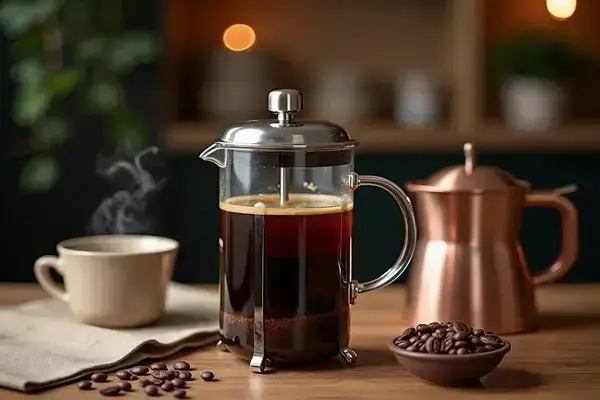
The truth is, the material and size of your French press can absolutely change your experience. A double-walled stainless steel model keeps your brew piping hot for longer. Glass gives you that classic see-through look—elegant, but you’ll need to pour quickly, as it loses heat faster. Ceramic versions hold heat well but tend to be on the heavier side. If you often host or like more than one cup at a time, a 1-liter (34 oz) press is the ‘sweet spot’ for most households.
| Type | Pros | Cons |
|---|---|---|
| Glass | Visually appealing, easy to see brew color | Fragile, loses heat quicker |
| Stainless Steel | Excellent heat retention, durable | Can’t see the brew, usually pricier |
| Ceramic | Top-notch heat holding, stylish | Heaviest, more expensive |
💡 Pro Tip: According to Specialty Coffee Association guidelines, freshly ground whole beans (right before brewing) always yield the fullest flavor in a French press. Pre-ground coffee stales quickly!
Now, let’s talk beans. For French press, medium or dark roast whole beans work best—they dissolve their oils and complex flavors completely during the longer steep. Stay away from “espresso grind” or anything too fine; you’ll end up with muddy, over-extracted coffee and a gritty cup. A burr grinder is your best friend for achieving the ideal coarse consistency.
Picture this scenario: You buy organic Ethiopian Yirgacheffe beans, grind them coarsely, and brew them in a glass press. The floral notes and rounded body come alive—so much better than the flat supermarket blend you used last week. That’s not luck, it’s about matching the press and bean quality to the method.
- Look for beans labeled “French roast” or “desired for press” to skip guesswork.
- If you want to experiment, try blending two origins—sumatra for body, Colombia for brightness.
- Don’t store your beans in the fridge; a tightly sealed canister in a cool, dry place preserves them best.
According to the National Coffee Association, 66% of American adults drink coffee daily—choosing the right press and beans makes sure every one of those cups counts.
But there’s one detail most owners completely overlook until it’s too late…
Getting The Coffee-To-Water Ratio Just Right
If you’ve ever tasted French press coffee that’s too watery or mouth-puckeringly bitter, you know how much the coffee-to-water ratio can make or break your morning. So what’s actually the right mix for getting that rich, full-bodied cup every single time?
Here’s the thing: there’s no magic “one size fits all.” But experts like the Specialty Coffee Association recommend starting with a ratio of 1:15 — that’s one part coffee to fifteen parts water by weight. It’s not as complicated as it sounds, and the difference you’ll taste is night and day.
- Gather your essentials first: a digital scale, fresh coarsely ground coffee, and filtered water.
- Weigh out your coffee (for a standard 32oz/1-liter press, that’s about 54g of coffee to 800g of water).
- Heat your water to about 200°F (just off boil).
- Add ground coffee to your empty French press.
- Pour in measured hot water, saturating all the grounds evenly.
- Let it steep (timer handy!) for 4 minutes, then plunge with steady pressure.
💡 Pro Tip: Not sure about grams? For every 1 cup (8 oz) of water, use about 2 tablespoons of ground coffee. Mark your scoop for consistency.
In practice: Imagine you’re making coffee for two on a lazy Saturday. You carefully measure beans on your scale instead of eyeballing it. The result? Consistent flavor, every mug — no more “hit or miss” mornings. You’ll actually notice sweet, chocolatey notes pop out, just by dialing in this basic ratio.
- If you prefer a stronger brew, try 1:13 for extra punch — but don’t overdo it, or bitterness creeps in.
- Want something lighter? Test 1:17, especially for delicate single-origin beans.
- The true secret is consistency: always measure, jot down what you liked, and tweak only one variable at a time.
According to the National Coffee Association USA, precise ratios and consistent technique are what separate café-quality results from the average home cup.
And this is exactly where most people make the most common mistake…
Mastering The Brewing Process From Start To Finish
Ever wonder why one French press tastes clean and deep, while another tastes flat or bitter—even when you’re using the same beans? The magic isn’t just in the ratio. It’s in the small brewing details, every step of the way.
Let’s walk through the process that truly separates a café-caliber cup from a mediocre one. Here’s what you’ll want on hand for a smooth routine:
- French press (1-liter recommended for most homes)
- Fresh, coarsely ground coffee
- Filtered water
- Kettle (preferably with gooseneck for control)
- Digital kitchen scale and timer
- Wooden or plastic spoon for gentle stirring
- Pre-warm Your French Press: Swirl hot water inside and then discard. This keeps temperature stable during brewing.
- Add Coffee: Place your desired dose of ground coffee (see previous section) in the empty, warmed press.
- Pour Water in Stages: Add just enough hot water to wet all the grounds. Wait 30 seconds for the “bloom”—tiny bubbles indicate fresh coffee.
- Pour the Rest: After blooming, slowly add the rest of your water, making sure all grounds are saturated.
- Stir Gently: Use a wooden spoon to break up the crust on top and distribute grounds evenly.
- Steep: Place the lid on, but don’t press yet. Set a timer for 4 minutes and resist the urge to plunge early.
- Press: After steeping, press the plunger down slowly and steadily. If it’s hard to push, your grind is too fine.
- Pour Immediately: Don’t let brewed coffee sit in the grounds—it’ll get bitter fast. Decant all of it into mugs or a serving carafe.
⚠️ Important Warning: Avoid using metal utensils to stir your press—steel can shatter glass over time and reacts with some brews, dulling flavor. The National Coffee Association specifically recommends wood or plastic.
In practice: Picture this scenario—you follow every step, counting seconds and pouring steadily. The aroma wafts up, the press glides down smoothly, and once you sip, there’s no bitterness, just a rounded, satisfying cup that rivals any artisanal café. It’s not luck. It’s control—every step matters.
What actually works might surprise you…
Avoiding Common Mistakes That Ruin French Press Coffee
What actually wrecks a good French press cup? If you’re already buying great beans and measuring carefully, it’s easy to overlook the hidden mistakes—until you take that first disappointing sip. Let’s break down common blunders and how to dodge them.
| Mistake | Why It Happens | Simple Fix |
|---|---|---|
| Using Too Fine a Grind | Creates sludge and bitterness | Choose coarse-ground, visually like sea salt |
| Leaving Brewed Coffee on Grounds | Over-extracts, resulting in harsh flavors | Decant immediately after pressing |
| Incorrect Water Temperature | Too hot burns, too cold under-extracts | 195–205°F is best (just off boil) |
| Forgetting to Preheat Press | Temperature drops, losing flavor complexity | Swirl hot water to preheat glass |
💡 Pro Tip: According to the Specialty Coffee Association, a 4-minute steep gives you rich, balanced extraction—longer or shorter times risk underwhelming or overpowering your cup.
In practice: You’re rushing on a Monday morning and accidentally use pre-ground coffee for drip. After plunging, your cup is full of silty grit—so you drink only half, regretting every sip. Later that weekend, you switch to fresh coarse grounds and decant the coffee right away. Suddenly, the flavor’s clear, not muddy. You feel like a home barista again.
- If your press is hard to push, back off on grind size or clean the filter mesh thoroughly—clogging is a real enemy of consistency.
- Always rinse your press and plunger with hot water to remove stale oils before brewing. This single habit improves taste more than any gadget ever could.
The National Coffee Association USA highlights that even veteran brewers overlook technique basics now and then—regular check-ins with your method pay off in every cup.
And this is exactly where most people make the most common mistake…
Cleaning And Maintaining Your French Press For Best Results
Do you dread cleaning your French press? Most people do—yet skipping or rushing this step is the #1 reason even the fanciest beans start tasting dull or “off” after a few brews. The truth is, a few small habits make your press last years and keep every cup bright, rich, and fresh.
- Disassemble Completely: Unscrew the plunger, separate the mesh filter, and take apart all removable pieces.
- Rinse Immediately: Dump grounds and rinse everything with hot water within minutes of brewing. Waiting lets oils harden and turns cleanup into a battle.
- Scrub (But Gently!): Use a soft-bristle brush or sponge to clean all surfaces, especially mesh filters where residue loves to hide. Mild, unscented dish soap works best.
- Deep Clean Weekly: Soak the mesh screen, metal, and glass parts in a solution of equal parts hot water and white vinegar for 10 minutes. Rinse very well afterward.
- Dry Well: Air dry completely before reassembling. Never store it damp—trapped moisture and oils breed odors and affect flavor.
⚠️ Important Warning: Don’t put any metal or glass pieces with mesh filters in the dishwasher unless your manufacturer specifically says it’s safe. According to the National Coffee Association USA, dishwashers can warp mesh and shorten your press’s life.
In practice: On busy weekday mornings, it’s tempting to let the grounds sit. But you make a deal with yourself—just sixty seconds to rinse and leave the parts on a towel. By Friday, your coffee still sparkles with that original, aromatic punch. No musty, old flavors. No wasted beans.
- Replace your metal mesh filter every 4–6 months for optimal extraction. They wear out gradually—if you see fraying or warping, it’s time for a new one.
- Store your French press fully dry and loosely assembled. This keeps airflow up and prevents odd odors.
Once this is in place, the rest of the routine falls into place naturally.
Your French Press Wins Ahead
Brewing great coffee at home isn’t complicated—now you know why. If you take just one thing from this french press guide beginners, let it be: care about your basics. The right press and beans, proper ratios, mindful brewing, simple cleaning—these are what make café-level coffee every single morning.
Think back—before this, French press felt like guesswork. Grounds in the cup, flavor all over the place, sometimes a little frustrating. Not anymore. You’ve got the small steps that change everything. Now, coffee at home is simple, rich, and reliably good. It’s actually something you’ll look forward to tomorrow.
What’s the first tip you can’t wait to try in your next French press brew? Share your thoughts down in the comments—let’s make every cup better together.

Ethan Cole Hargrove is a pour over coffee enthusiast, specialty coffee writer, and the founder of this blog — built for anyone who has ever tasted a truly great cup of coffee and wanted to understand exactly how to make it at home.
Ethan’s coffee journey started the way most do — with a supermarket blend and a cheap drip machine. Then one morning at a specialty café, a barista handed him a pour over and everything changed. The clarity, the complexity, the way the same bean could taste completely different depending on how you brewed it. He was hooked.
What followed was years of testing every dripper, grinder, kettle, and filter he could get his hands on. Comparing Chemex vs V60 vs Kalita. Dialing in grind size by the click. Learning why water temperature matters more than most people think. Building a morning ritual around a process that is as meditative as it is delicious.
Ethan is not a Q Grader, certified barista, or